
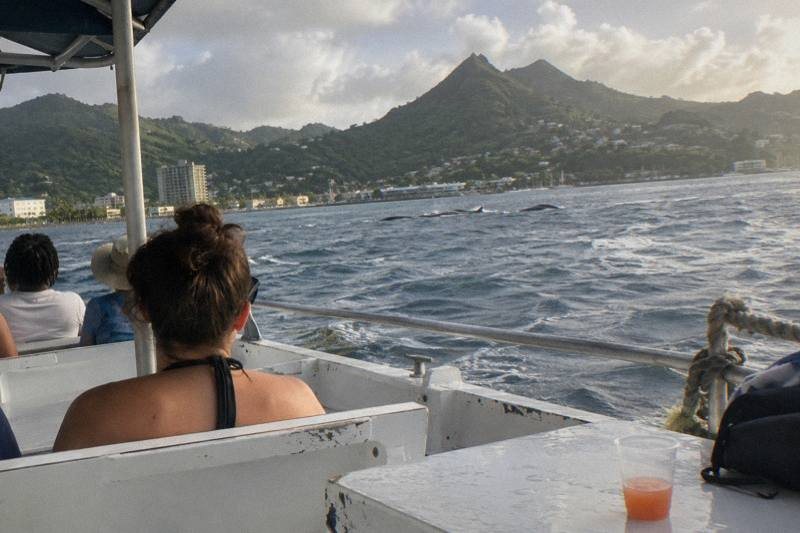
Shared Boat, 3 Hours 30 Minutes
A shared morning cruise of about three and a half hours with a local marine expert aboard, drinks included and free cancellation up to 24 hours before.
Check availability
St Lucia whale watching starts at Vigie Marina in Castries, where two boat trips head out along the west coast. Here is what each one includes, costs and depends on.
Book Shared Boat, 3 Hours 30 MinutesFirst Sign On The Surface
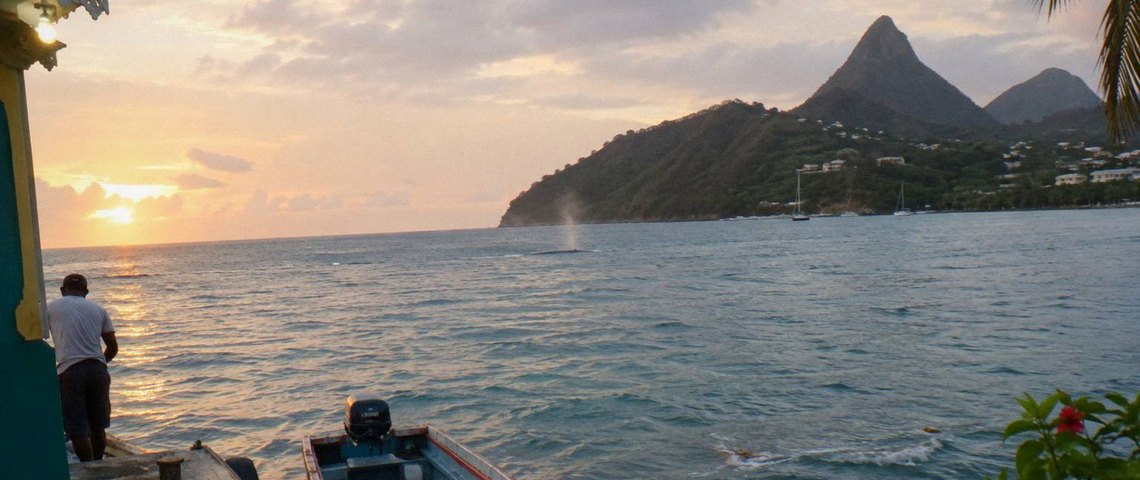
Blow. A bushy blow of mist often marks humpbacks passing through from about February to April, and sometimes from December. See The Species
Dorsal Fin. A low rounded fin cutting the surface can mean spinner, spotted or bottlenose dolphins, which live here all year. See The Species
Fluke. A raised tail usually belongs to sperm whales in the deeper offshore water, or to humpbacks in season. See The Species
Leap. A spinning or breaching leap is often dolphins, though rare orcas can appear at any time of year. See The Species
Two boat trips out of Vigie Marina in Castries cover St Lucia whale watching: a shared Whale and Dolphin Watching Cruise of about 3.5 hours with a local marine expert aboard, and a Private Whale and Dolphin Safari charter of about 4 hours, private to one group on a catamaran. The shared cruise, the more reviewed listing at 4.5 from 200 reviews, from US$65 per person, is featured first. The private charter, 4.5 from 75 reviews, is priced per boat and includes cruise ship pier pick-up.
A shared morning cruise of about three and a half hours with a local marine expert aboard, drinks included and free cancellation up to 24 hours before.
Check availability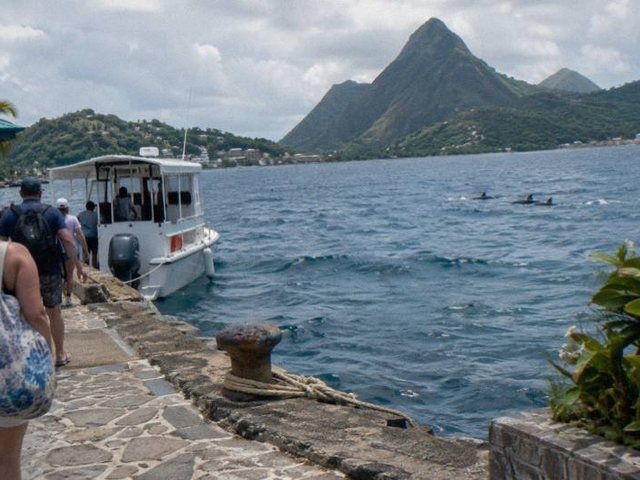
A private 50 ft catamaran for up to 40 guests, about four hours with a professional guide, pier pick-up included and free cancellation up to 24 hours before.
Check availabilityThe shared cruise runs on a custom 60 ft boat with other guests, listed at about three and a half hours, while the private safari puts a 50 ft catamaran at one group's disposal for about four hours, with room for up to 40 guests. The price bases differ and should not be read side by side: the shared trip is quoted per person, from US$65 per person on the listing, while the charter is quoted for the whole boat, from US$2,550.65 per boat. Splitting that per-boat price across a group is arithmetic, not a second price.
Who is aboard also differs. The shared cruise carries a local marine expert who gives tips on spotting whales and dolphins in the wild, plus bottled water, soft drinks and rum punch. The private safari includes a professional guide, soft drinks, coffee, tea, mineral water, light snacks, rum punch and local fruit. Gratuities are extra on both.
| Tour | Price | Length | Rating |
|---|---|---|---|
| Shared Boat, 3 Hours 30 Minutes | US$65 per person | 3 hours 30 minutes | 4.5 (200) |
| Private Charter, 4 Hours | US$2,550.65 per group | 4 hours | 4.5 (75) |
The two trips treat cruise passengers differently. The private charter listing includes cruise ship pier pick-up and drop-off in Castries; the shared cruise does not, though its departure point at Captain Mike's, Vigie Marina, sits a short distance from the Pointe Seraphine cruise terminal, just before the Coal Pot Restaurant and beside the airport runway. Hotel pick-up is not included on either listing. Both offer free cancellation up to 24 hours before departure, per the booking terms on the listing. The booking page shows the live price and confirms the departure details at the time you reserve.
Both boats follow the west coast, where deep water lies close to shore, and both look for the same cast: sperm whales offshore, pilot whales, spinner, spotted and common dolphins, and humpbacks during the migration window. Neither trip promises a sighting, and neither offers swimming with the animals. When the whale watching St Lucia listings are read side by side, the real choice is shared atmosphere against a boat of your own.
| Trip | Price Basis | From Price | Listed Length |
|---|---|---|---|
| Shared Boat, 3 Hours 30 Minutes | Per person | US$65 | 3 hours 30 minutes |
| Private Charter, 4 Hours | Per boat | US$2,550.65 | 4 hours |
St Lucia whale watching is priced on two different bases, and the difference matters more than the numbers themselves. The shared Whale and Dolphin Watching Cruise is sold per person, from US$65 per person as read on the listing. The Private Whale and Dolphin Safari is sold as a whole boat, from US$2,550.65 per boat, whether two guests climb aboard or forty. The booking page shows the live price in each case.
Because the charter price attaches to the boat rather than a seat, a per-head figure can only be as labelled arithmetic on the per-boat price. Divide from US$2,550.65 by the group size and the ladder reads: two guests, about US$1,275.33 each; four guests, about US$637.66 each; six guests, about US$425.11 each; ten guests, about US$255.06 each; twenty guests, about US$127.53 each; forty guests, about US$63.77 each. These are divisions, not offered rates: the listing charges the per-boat price however many people are aboard, up to the 40-guest capacity.
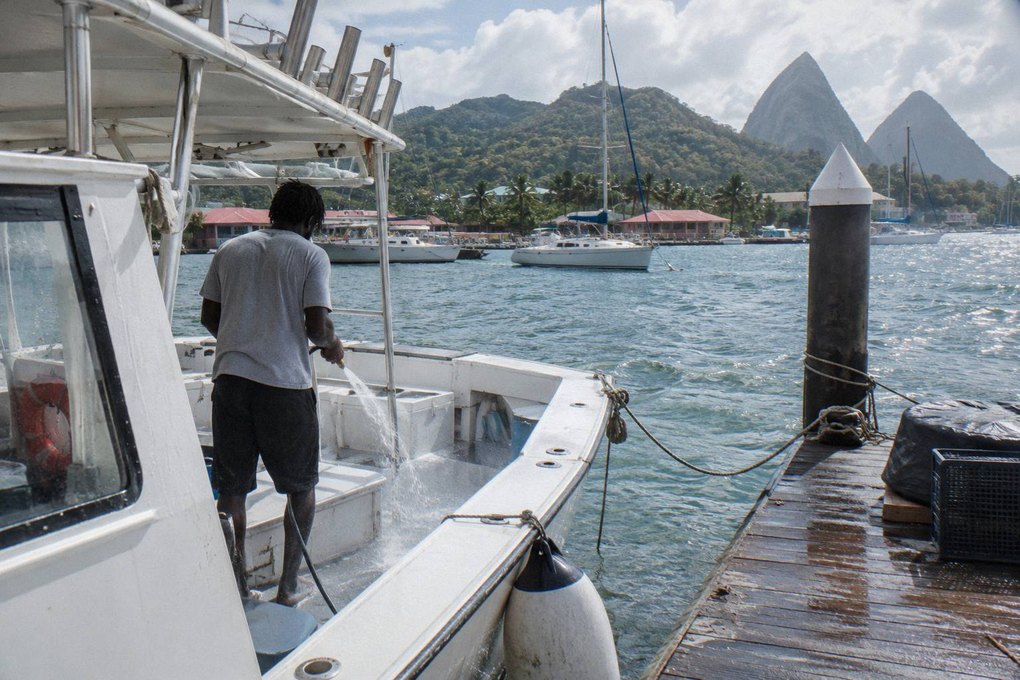
The per-person price on the shared cruise includes the boat, a local marine expert, bottled water, soft drinks and rum punch across roughly three and a half hours. The per-boat price on the private safari includes about four hours on a 50 ft catamaran, a professional guide, soft drinks, coffee, tea, mineral water, light snacks, rum punch, local fruit, and cruise ship pier pick-up and drop-off in Castries. Gratuities sit outside both prices. Hotel pick-up is not included on either trip, so factor a taxi to Vigie Marina into either budget. Free cancellation applies up to 24 hours before departure on both listings.
Never compare US$65 per person against US$2,550.65 per boat as though they shared a basis. One buys a seat, the other buys the boat, and the whale watching St Lucia arithmetic only lines up once you fix a group size.
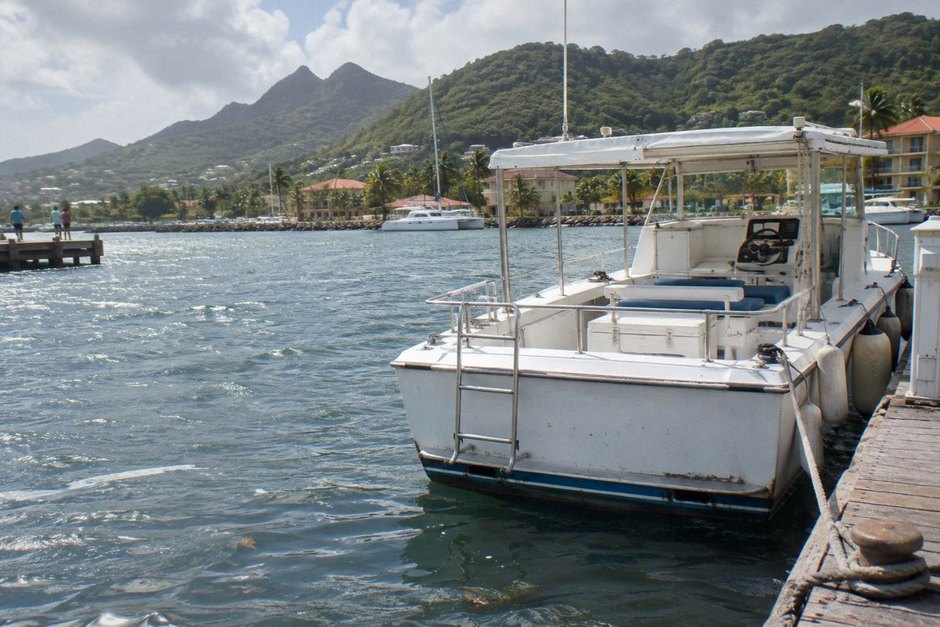
The per-head arithmetic on the private charter falls as the group grows: about US$255.06 each at ten guests, about US$127.53 each at twenty, about US$63.77 each at forty. Only at that top rung does the charter's divided cost drop below the shared cruise's seat price of from US$65 per person, and even then the comparison is arithmetic against a listed from-price, not a like-for-like fare. Between a full boat and a couple, the ladder spans roughly a twentyfold difference per head, which is why group size, not the sticker price, drives the real decision.
The per-head figures are pure division. What actually differs between the two trips is the experience: a shared 60 ft boat with other guests for about 3.5 hours, against a private 50 ft catamaran for one group, up to 40 guests, for about 4 hours. The private listing includes cruise ship pier pick-up and drop-off in Castries; the shared cruise does not. Both include drinks, the charter adds snacks and local fruit, and gratuities are extra on both. Hotel pick-up is absent from either price.
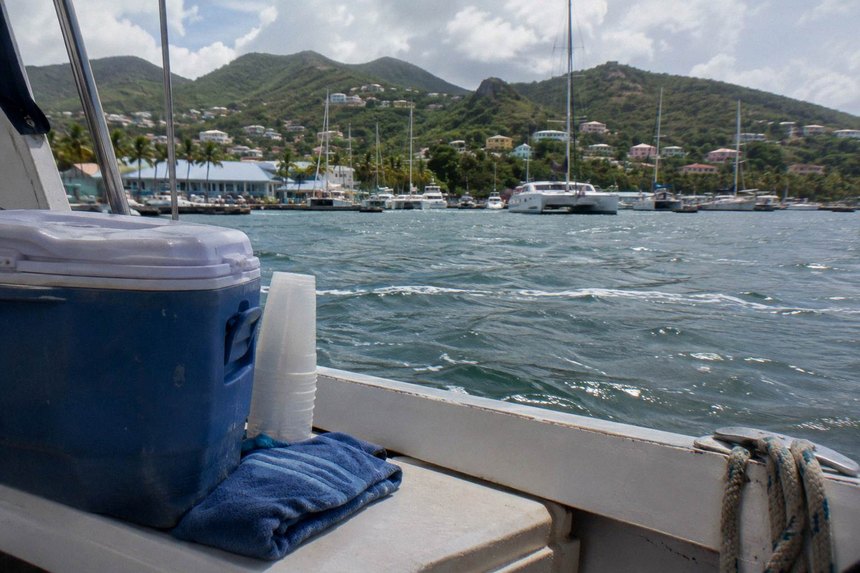
Cancellation terms are stated on both listings as free up to 24 hours before departure, and the booking page carries the live figures. For whale watching St Lucia visitors weighing cost, the honest summary is this: solo travellers and couples face a clear per-person price on the shared boat, while larger groups can divide a per-boat price that, at capacity, lands within about a dollar of the shared seat on arithmetic alone.
The choice behind St Lucia whale watching comes down to one question: do you want a seat on a shared boat, or the whole boat to yourself? The compare section puts the differences plainly. The shared Whale and Dolphin Watching Cruise runs on a custom 60 ft vessel with other guests aboard, listed at about 3.5 hours, with cruise ship pier pick-up not listed. The Private Whale and Dolphin Safari runs on a 50 ft catamaran, private to your group of up to 40 guests, listed at about 4 hours, with cruise ship pier pick-up and drop-off included.
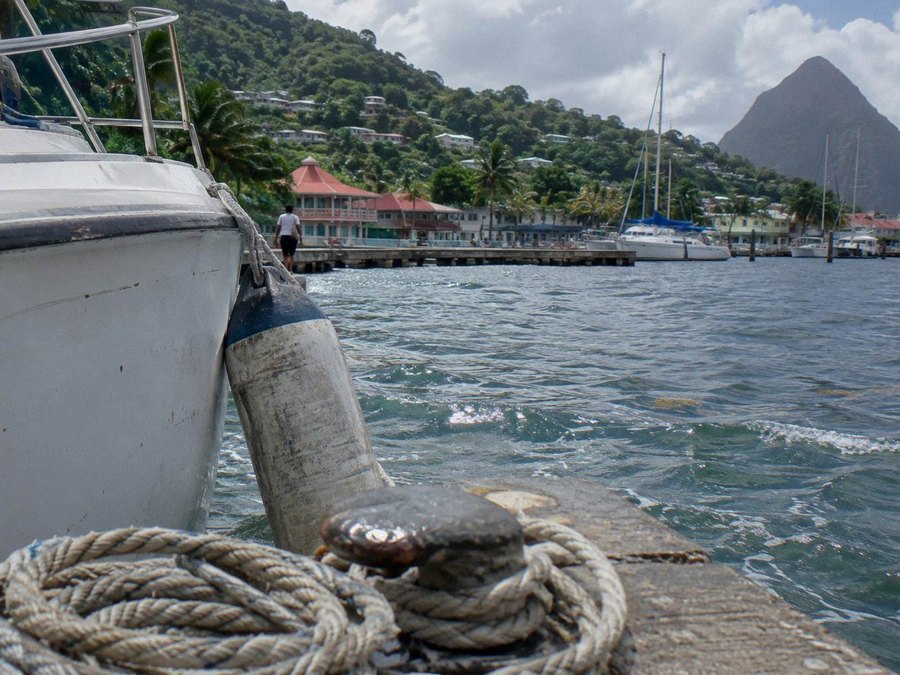
A shared trip means strangers on the rail beside you, which has its own appeal: a fuller deck when a pod of spinner dolphins shows up, a local marine expert working the crowd with spotting tips, and a per-person price that makes the decision simple for solo travellers and couples. Bottled water, soft drinks and rum punch are included. The trade is control. You leave when the boat leaves, follow the route the captain sets along the west coast, and share every sighting.
| Trip | Boat | Who Is Aboard | Listed Length | Cruise Ship Pier Pick-Up |
|---|---|---|---|---|
| Shared Boat, 3 Hours 30 Minutes | Custom 60 ft boat | Shared with other guests | About 3.5 hours | Not listed |
| Private Charter, 4 Hours | 50 ft catamaran | Private to your group, up to 40 guests | About 4 hours | Included |
The private safari hands the catamaran to one group, up to 40 guests, for about four hours. A professional guide is aboard, and the drinks list runs longer: soft drinks, coffee, tea, mineral water, rum punch, plus light snacks and local fruit. Cruise passengers get pier pick-up and drop-off in Castries, a real convenience when the all-aboard clock is ticking. The price is quoted per boat, from US$2,550.65, which shifts the arithmetic toward larger parties. Gratuities are extra on both trips, and hotel pick-up is included on neither.
Both boats leave Vigie Marina in Castries Harbour and work the same water, where the sea floor drops away close to the west coast and the crew looks for sperm whales, pilot whales, dolphins and, in season, humpbacks. Neither listing promises a sighting, and neither offers swimming with the animals. For whale watching St Lucia style, the species list is shared; only the boat, the length, the price basis and the pier transfer differ.
Solo travellers, couples and small families travelling light fit the shared boat naturally. The per-person price is straightforward, the trip runs about three and a half hours, and the listed terms welcome infants in prams or strollers, service animals, and all physical fitness levels, with children accompanied by an adult. Cruise ship passengers can book it too, though there is no pier pick-up listed: Vigie Marina sits a short distance from the Pointe Seraphine terminal, and the listing asks cruise passengers to supply ship name, docking time, disembarkation time and re-boarding time when booking. Note the listing's warning that refunds will not be issued if the tour is missed due to a late or non-arriving ship.
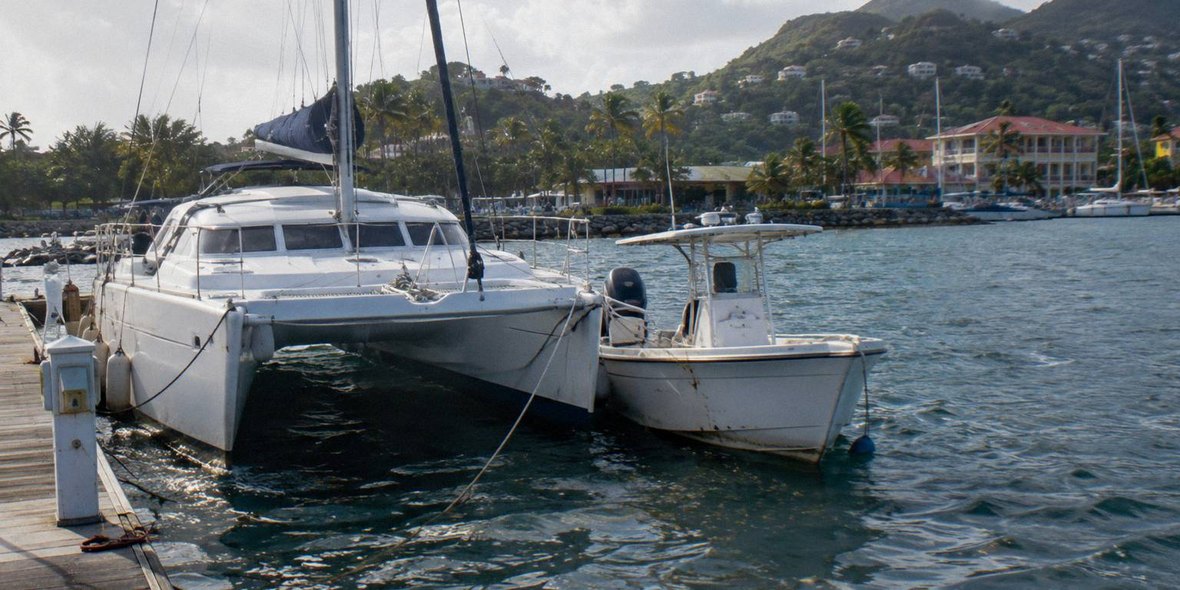
Larger groups are the natural fit, up to the 40-guest capacity of the 50 ft catamaran. A wedding party, an extended family, a dive club or a company trip can divide the per-boat price, and the arithmetic improves as the headcount grows: about US$127.53 each at twenty guests, about US$63.77 each at forty. The listing is wheelchair accessible throughout, infants can ride in prams or strollers, and the dress code is simply cool, comfortable clothing. Cruise passengers get pier pick-up and drop-off included, which removes the tightest constraint of a port day.
Between the two St Lucia whale watching options, flexible travel dates matter less than group shape. A pair travelling on open plans loses little by sharing a deck; a big group gains the whole boat, a longer four-hour window, snacks and fruit, and a private guide, at a per-boat price that only the group can judge.
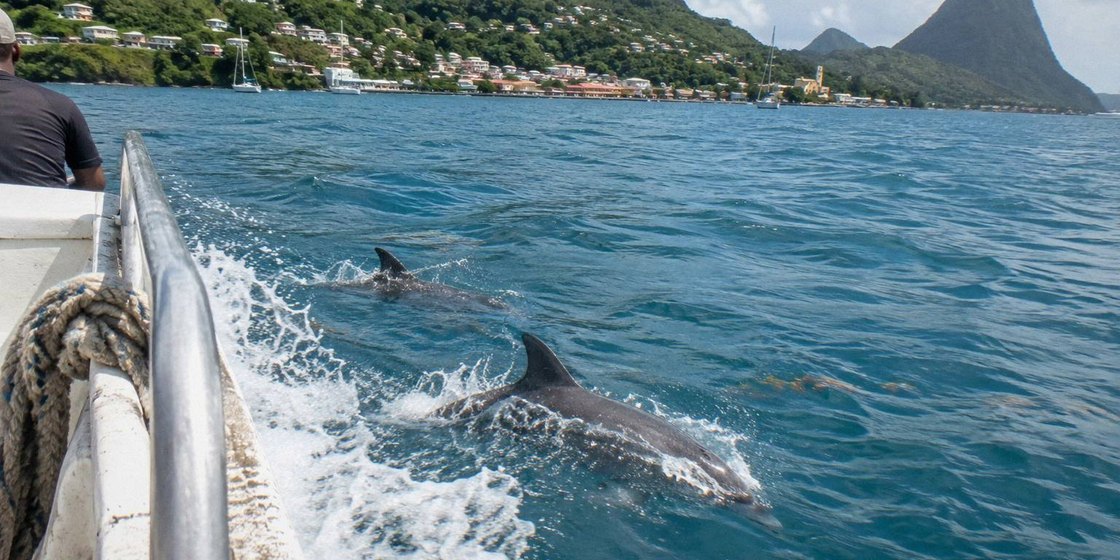
St Lucia whale watching works because the island's west coast sits next to deep water, and the deep water holds animals. Spinner dolphins are frequently sighted year-round. Pantropical spotted dolphins are common in warm offshore water, especially along that coast. Bottlenose dolphins are common. Fraser's, Risso's and striped dolphins are recorded but seen less often, so any encounter with them counts as a good day.
Pilot whales live in the area in close-knit family groups, and resident pods can sometimes be seen throughout the year. Sperm whales are the deep-water residents: considered resident in the region, they are occasionally sighted in the deeper water offshore, and they belong to the wider Eastern Caribbean population that researchers have studied for years. No Saint Lucia head count exists, and none is needed; the animals are there, and the crew looks for them. Humpback whales pass through on migration between about February and April, the window given by the official Saint Lucia tourism source. Some operators report them from December, but from May to November humpbacks should be treated as unlikely. Orcas appear in these waters only as rare visitors.
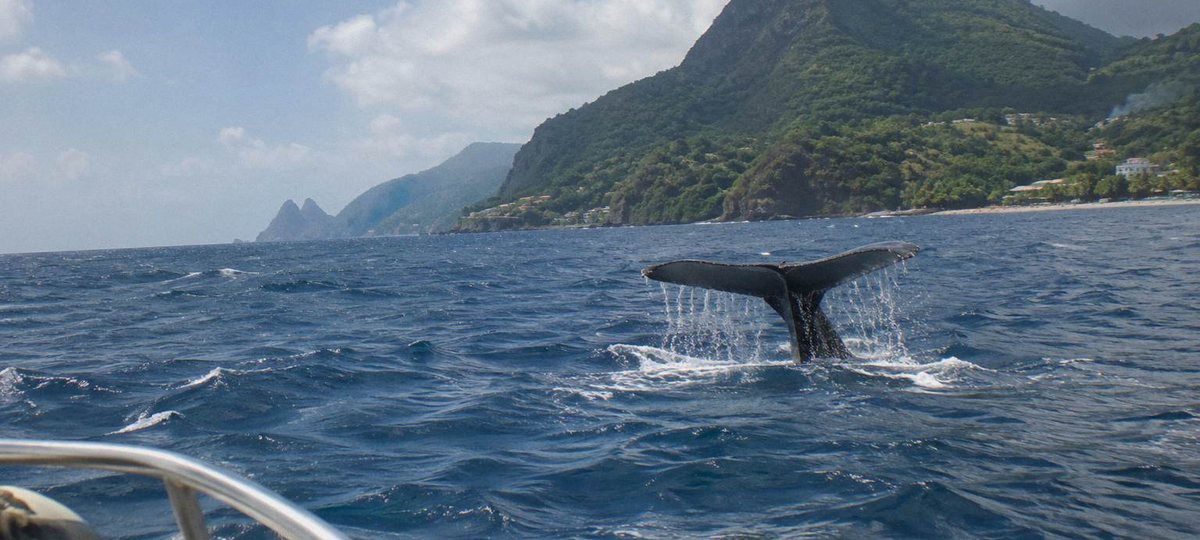
The shared cruise's own description asks guests to search for sperm whales, humpbacks and pilot whales, along with spinner, spotted, Fraser's and common dolphins. That list matches the regional record closely. Every one of these animals is a chance, never a promise: sightings depend on weather, season and the animals' own movements, and no honest operator or listing guarantees an encounter. The crew looks for them, the guides offer tips on spotting marine mammals in the wild, and the ocean decides the rest. For whale watching St Lucia visitors, that uncertainty is part of the point: these are wild animals, watched on their terms, from a boat that follows the Caribbean coast.
Saint Lucia's west coast drops away steeply, so deep water lies close to shore. That geography is the reason whale watching St Lucia trips can reach offshore species on a run of three to four hours from Castries rather than a long passage out. Sperm whales, which favour that deeper water, can therefore appear not far from land, while the dolphins and pilot whales work the same stretch in shallower bands.
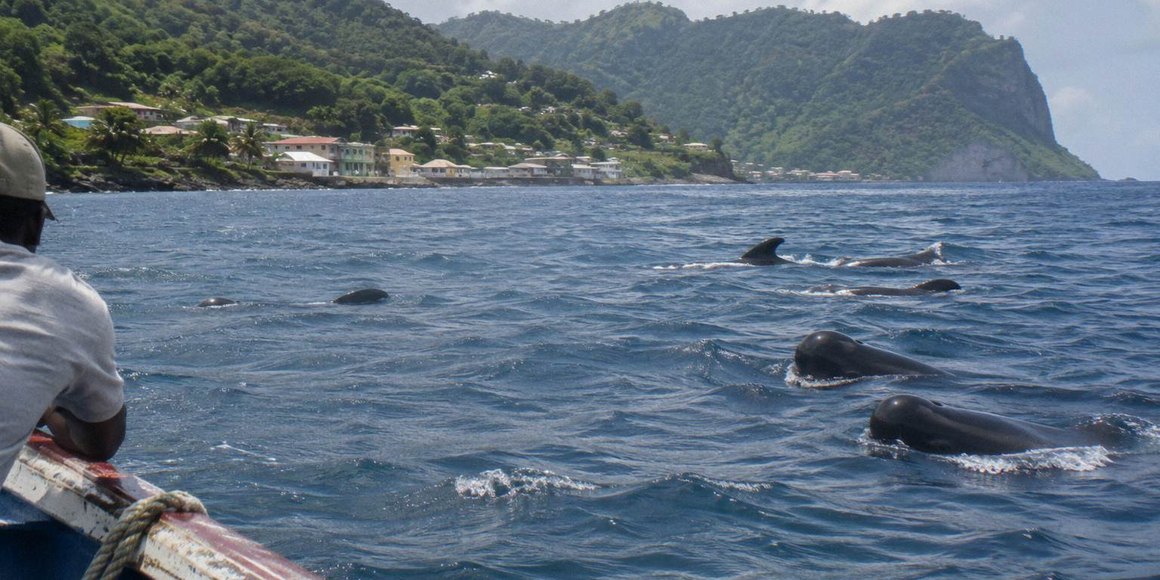
What the ocean shows depends on when you go. February to April adds humpbacks to the possible list as they pass through on migration; some operators report them from December, and May to November makes them unlikely. Dolphins and pilot whales can be seen all year. Seas are typically calmer from December to May, which shapes comfort on board as much as anything, so a light layer for spray is sensible whatever the month.
Honesty is the only fair framing here. Sightings depend on weather, season and the natural movement patterns of the animals, and no source worth printing promises otherwise. The operators follow responsible viewing practice: a slow approach, no chasing, no touching or feeding, and space for the animals to move on. Neither listing offers swimming with whales or dolphins. What St Lucia whale watching offers instead is a chance at sperm whales, pilot whales, year-round dolphins and, in a narrow window, migrating humpbacks, from a boat that treats the animals as the host.
Vigie Marina sits inside Castries Harbour, beside the airport runway and just before the Coal Pot Restaurant, and it is here that the shared Whale and Dolphin Watching Cruise begins. The meeting point is Captain Mike's, and the trip is listed at three hours and thirty minutes with a morning departure.
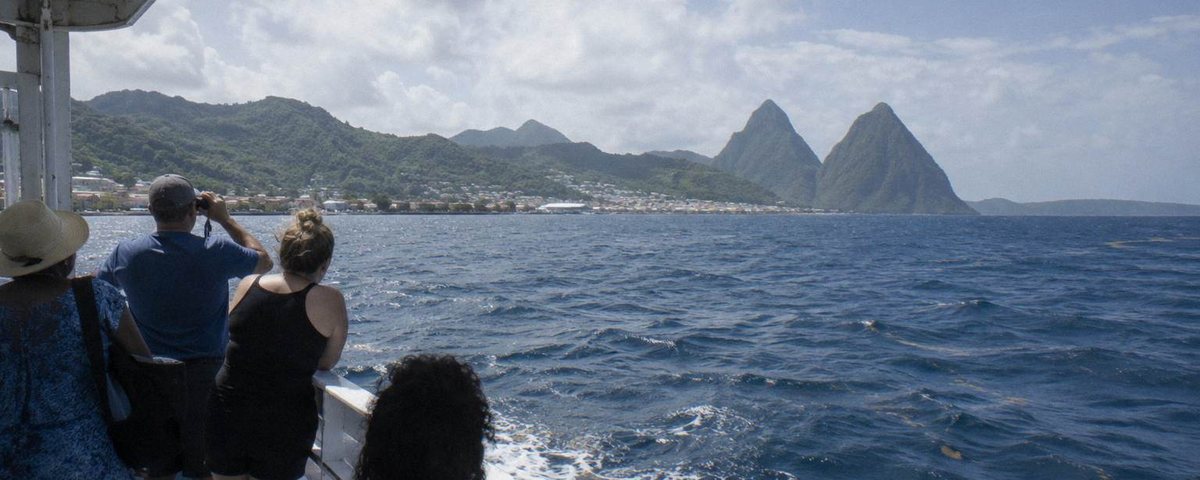
Once under way, the custom 60 ft boat follows the Caribbean coast north-west. The route matters more than it might seem. A steep drop-off lies off Saint Lucia's west coast, which puts deep water unusually close to shore, so the boats do not have to steam far offshore before they are searching over habitat where whales and dolphins actually live. The crew looks for sperm whales in the deeper water, pilot whales in their close-knit family groups, and the dolphin species recorded here year-round: spinner, pantropical spotted and bottlenose dolphins, with Fraser's, Risso's and striped dolphins seen less often.
A local marine expert sails aboard and shares tips on spotting wild marine mammals, from surface blows and flukes to the shape of a distant dorsal fin. Between sightings, the guide gives an informative view of the West Coast as it passes. Humpbacks are the seasonal prize: they pass through on migration between about February and April, the official window, with some operators reporting them from December. The rest of the year, dolphins and pilot whales are the realistic quarry.
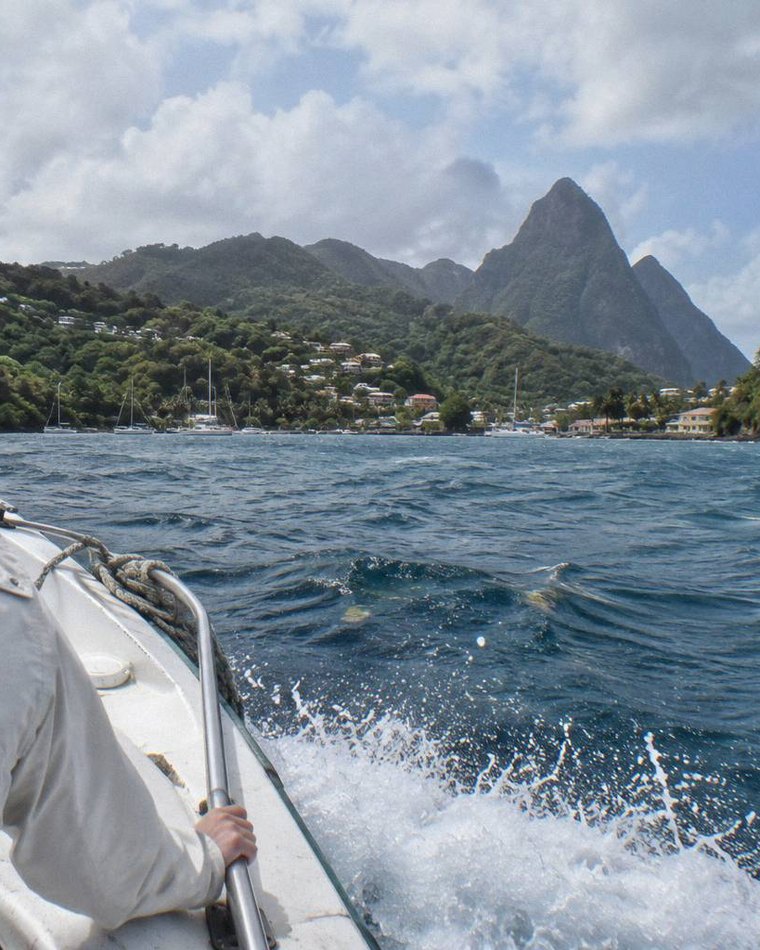
Bottled water, soft drinks and rum punch are included on board, poured as the coastline scrolls past. The trip ends where it began, back at Vigie Marina, with the airport runway alongside and Castries a short hop away. Sightings always depend on weather, season and the animals' own movements, and nothing about the cruise changes that. What the format offers is a steady, repeatable morning at sea in waters where the animals are genuinely present.
Both listings depart Vigie Marina, but they are different products. The shared Whale and Dolphin Watching Cruise is a 3.5 hour trip aboard Captain Mike's custom 60 ft boat, with other guests aboard and a local marine expert as guide. The Private Whale and Dolphin Safari, run by Hackshaw's Boat Charters, is a 4 hour private charter for one group on a 50 ft catamaran carrying up to 40 guests, with a professional wildlife guide.
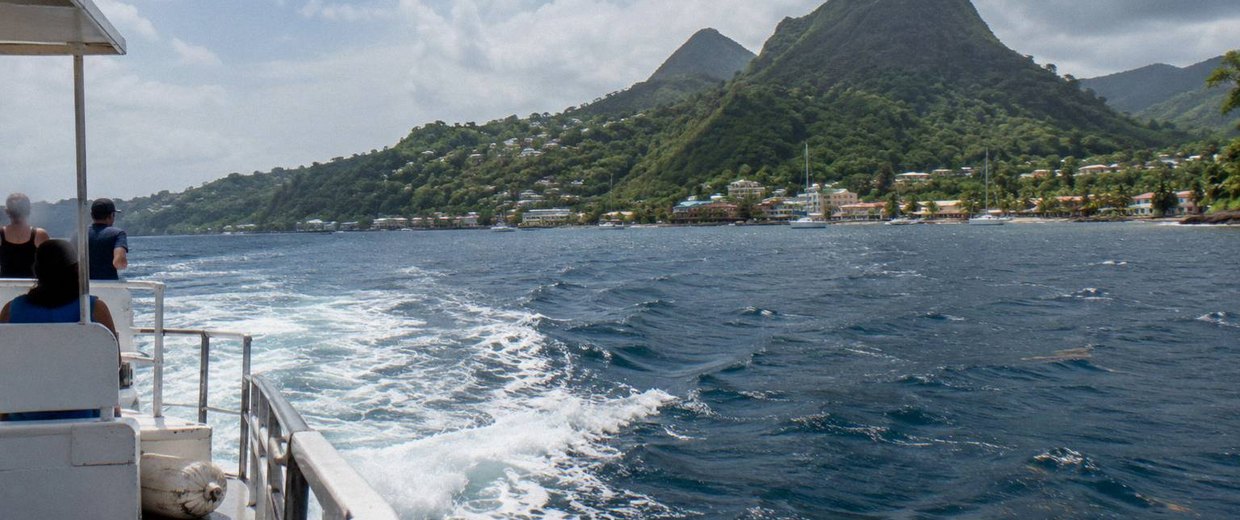
The shared cruise includes bottled water, soft drinks and rum punch. The private charter lists soft drinks, coffee, tea, mineral water, light snacks, rum punch and local fruit. The shared cruise is priced per person, from US$65 per person. The charter is priced per boat, from US$2,550.65 per boat, never per person. Split between 10 guests that is about US$255.06 each, arithmetic on the per-boat price; split between 40, about US$63.77 each on the same basis. The two figures do not compare directly, because one is a per-head fare on a shared boat and the other is a whole-boat rate.
Neither listing promises a sighting, and no percentage appears here. The shared listing names sperm whales, humpbacks, pilot whales and spinner, spotted, Fraser's and common dolphins as species the crew searches for, with humpbacks passing through between about February and April. Neither listing offers swimming with the animals, and neither includes hotel pick-up. The private listing includes cruise ship pier pick-up and drop-off; the shared listing does not. Gratuities are extra on both.
Loading the map. Every place is also listed below.
Map tiles and place names: © OpenStreetMap contributors
It sits in Castries Harbour, in the Ganters Bay area at Vigie, beside George F. L. Charles Airport and its runway, and the shared cruise meets at Captain Mike's, just before the Coal Pot Restaurant. For anyone flying into SLU, the regional airport, the marina is literally next door. The private charter lists its departure as the cruise ship pier in Castries, with pick-up and drop-off included.
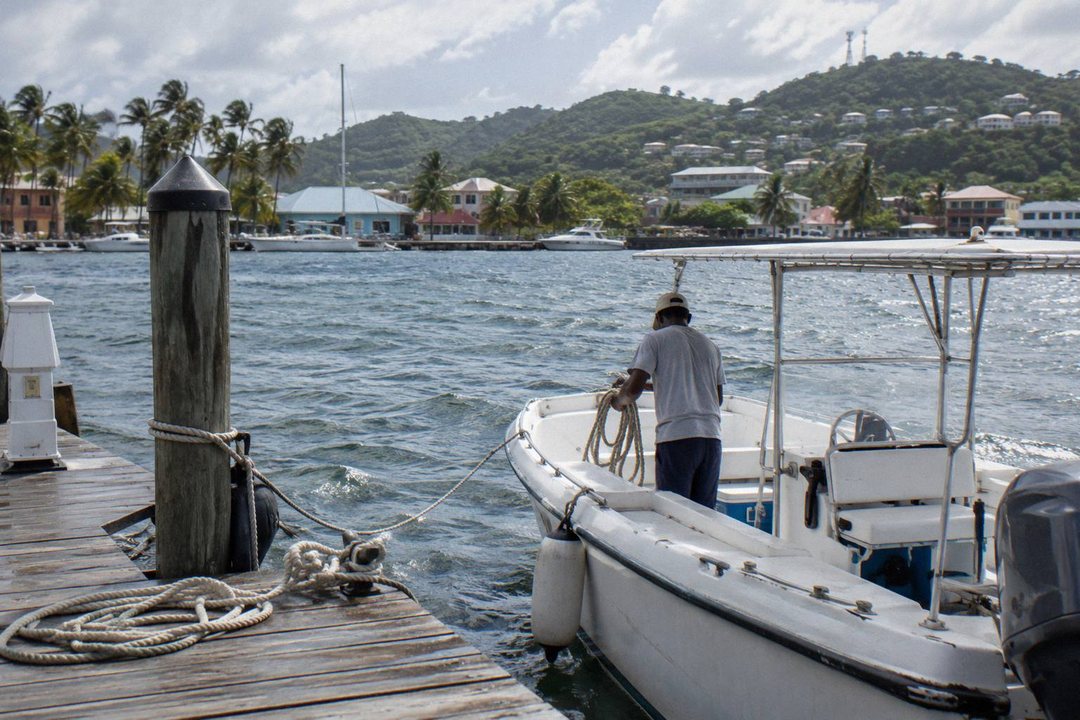
Cruise passengers arrive at two terminal areas in Castries: Pointe Seraphine and La Toc. Pointe Seraphine sits a short distance from Vigie Marina, and taxis are readily available in Castries. The private charter's pier pick-up removes the transfer question entirely for cruise guests. The shared cruise does not include any pick-up, so passengers make their own way to the marina, and cruise ship passengers booking it must give the listing their ship name, docking time, disembarkation time and re-boarding time at the time of booking. The listing also states plainly that no refund is issued if the tour is missed because a cruise ship arrives late or not at all.
| Coming From | Where To Go | Note |
|---|---|---|
| Cruise ship at Pointe Seraphine | Vigie Marina | A short distance away; the private charter listing includes cruise ship pier pick-up and drop-off, the shared cruise does not |
| The airport (SLU) | Vigie Marina | The marina sits beside George F. L. Charles Airport |
| Rodney Bay or Marigot Bay | Vigie Marina | Neither trip departs from these bays; hotel pick-up is not included |
| Soufriere and the Pitons | Vigie Marina | Neither trip sails to the Pitons; the boats follow the west coast |
Both trips leave in the morning and last three to four hours, which is why the departure point matters for St Lucia whale watching: the boats follow the Caribbean coast from Castries, out over the deep water that lies close to the west coast of the island. Hotel guests staying anywhere on the island also converge on Vigie Marina, because hotel pick-up is not included on either listing. Public transportation options are available nearby, per the listings.
What the marina is not: it is not Rodney Bay Marina, further north, and it is not a departure point for trips to the Pitons. Neither boat sails south to Soufriere. Both simply leave Castries Harbour, turn along the west coast, and come back.
North of Vigie Marina lies Rodney Bay, with its marina and Pigeon Island National Landmark nearby. Both leave from Vigie Marina in Castries Harbour, so guests staying in Rodney Bay make their own way south to the departure point, because hotel pick-up is not included on either listing.
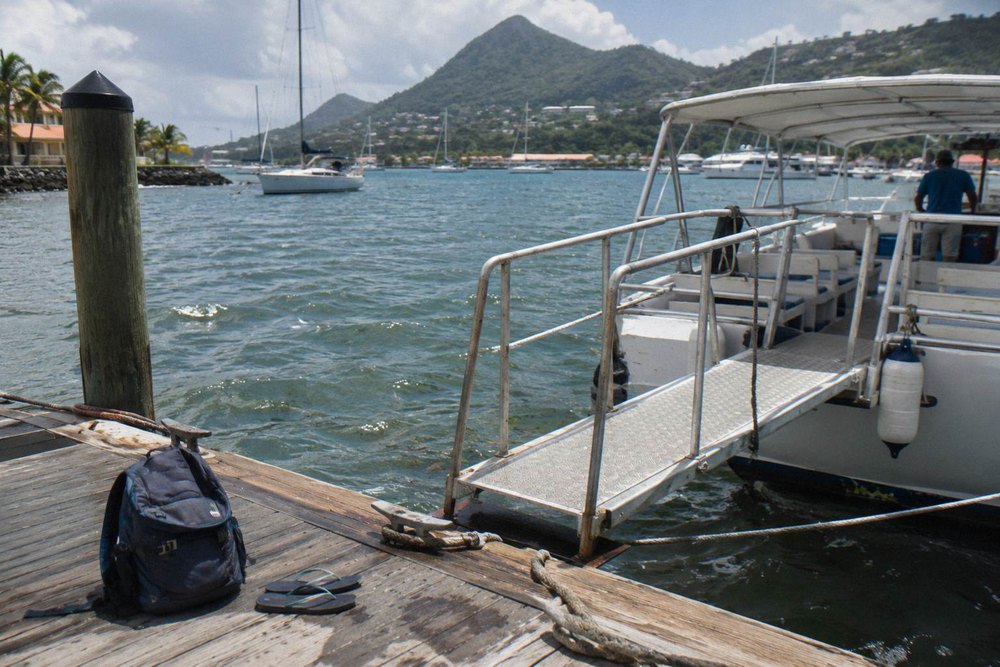
Further south along the coast, Marigot Bay curves inland behind its famous headland, and beyond it sit Anse La Raye, Soufriere and the Pitons, Gros and Petit, with Anse Chastanet between them. These places are map context, not itinerary. The whale watching St Lucia boats described here follow the west coast out of Castries in search of animals; neither listing includes stops at the bays or the Pitons.
Hotel pick-up is excluded on both the shared cruise and the private charter. The private charter does include cruise ship pier pick-up and drop-off in Castries, which covers the transfer for cruise passengers. Everyone else, whether staying in Rodney Bay, Marigot Bay or Soufriere, travels to Vigie Marina independently. Taxis are readily available in Castries, public transportation options are available nearby per the listings, and the marina sits beside George F. L. Charles Airport for those arriving on regional flights. No road times are printed here because no verified figures exist.
Every month works for something, which is the honest starting point for St Lucia whale watching. Spinner dolphins are frequently sighted year-round, bottlenose dolphins are common, and pantropical spotted dolphins are common in the warm offshore water along the west coast. Pilot whales are resident, with pods sometimes seen through the year in close-knit family groups. Sperm whales live in the deeper water offshore and are considered resident in the region, occasionally sighted. Orcas are rare visitors only.
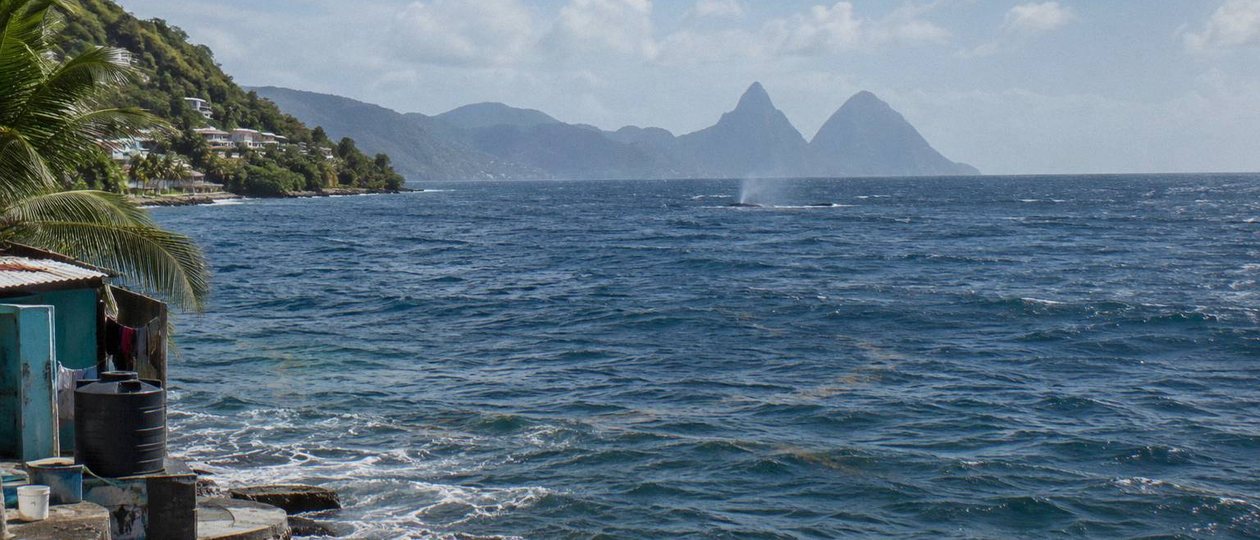
The headline season is February to April, when humpback whales pass through on migration, according to Saint Lucia's official tourism sources. Some operators report humpbacks from December, which widens the practical window at the edges, but from May to November humpbacks should be treated as unlikely. Anyone booking a summer trip with humpbacks in mind is reading the calendar wrong; anyone booking for dolphins and pilot whales is not.
Sea state is the other variable. Seas around Saint Lucia are typically calmer from December to May, which overlaps neatly with the humpback window and makes those months the comfortable choice for whale watching St Lucia beginners and anyone prone to motion sickness. The official Atlantic hurricane season runs June 1 to November 30, a plain calendar fact worth knowing when planning any Caribbean trip.
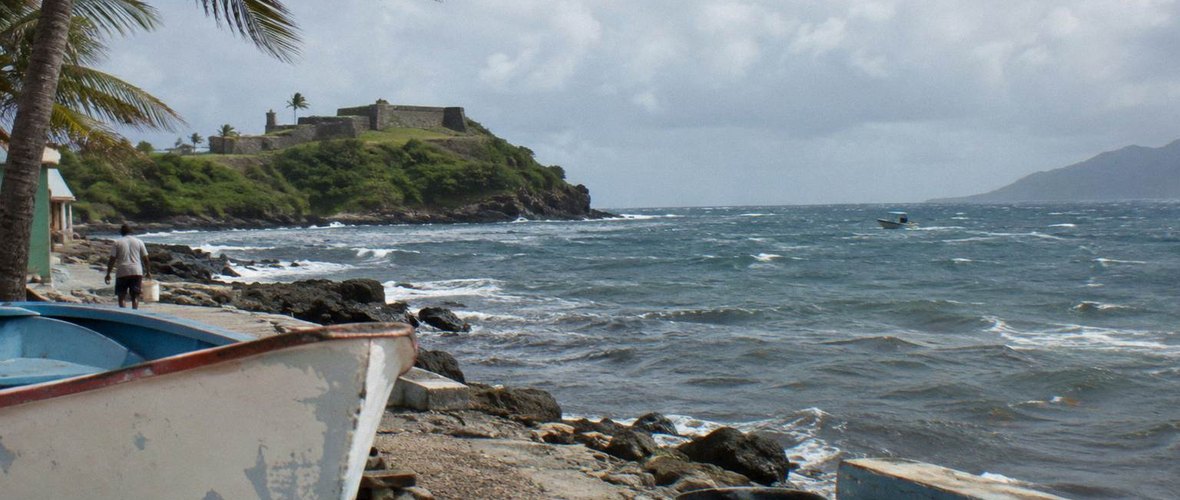
Fraser's, Risso's and striped dolphins are recorded in these waters but seen less often, a bonus rather than a target. What no month offers is a promise. Sightings depend on weather, season and the animals' own movements, and the deep water close to the west coast raises the chance of encounters near shore without guaranteeing them. February to April brings the migration; December to May brings calmer water; every month brings resident pods.
Trips around Saint Lucia usually leave in the morning and last three to four hours. Both listings here follow that pattern: the shared cruise about 3.5 hours, the private charter about 4 hours, both out of Vigie Marina in the morning.
A November or summer booking is not a wasted booking. Dolphins and pilot whales can be seen all year, and sperm whales live in the deeper offshore water regardless of month. What changes is the humpback question: from May to November they are unlikely, so a summer date should be booked for the resident species, not the migration. Seas are typically calmer from December to May, which is a comfort point rather than a verdict on sightings.
Both listings offer free cancellation up to 24 hours before departure, and the private charter also allows cancellation for bad weather. Booking the shared cruise as a cruise passenger requires ship details at the time of booking, and the listing states that refunds will not be issued if the trip is missed through late or non-arrival of the ship. Check the ship's all-aboard time against the trip length before booking either way; the exact duration of any transfer to the marina depends on the time of day and traffic conditions.
The two listings are close but not identical on what comes with the fare. The shared Whale and Dolphin Watching Cruise includes a local marine expert aboard plus bottled water, soft drinks and rum punch. The Private Whale and Dolphin Safari includes a professional guide, soft drinks, coffee, tea, mineral water, light snacks, rum punch and local fruit, along with cruise ship pier pick-up and drop-off. Snacks and fruit are listed only on the charter.
What is extra is the same on both: gratuities and hotel pick-up. Neither listing includes a hotel transfer, so every guest makes their own way to Vigie Marina, or uses the pier pick-up in the case of the charter's cruise passengers. Money carried on board should assume tips for the crew are discretionary and separate.
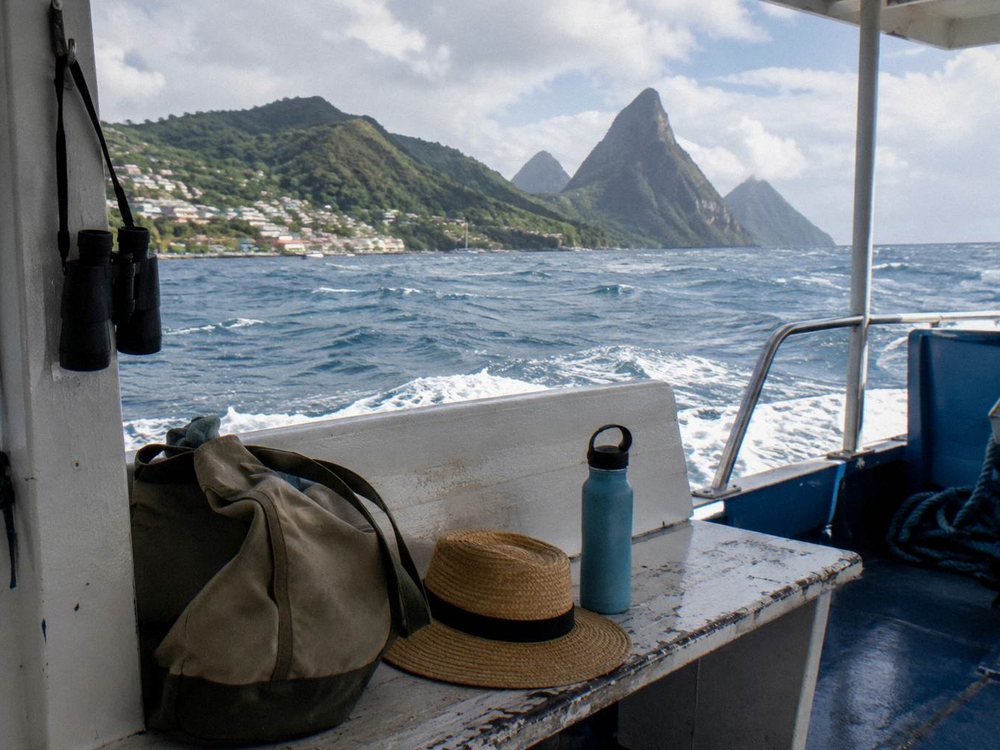
The packing list is short and practical. Sun protection comes first, because three to four hours on Caribbean water is a long exposure even under cloud. A hat that will survive wind. A light layer for spray, since the boats move at speed between searching areas and the forward deck catches the wet air. A camera, ideally with a strap, for the moments when a pilot whale surfaces alongside or a spinner dolphin loops clear of the water. Anyone prone to motion sickness should ask about boat size before booking: the shared cruise uses a custom 60 ft boat and the charter a 50 ft catamaran, and larger vessels generally move less.
Suitable for all physical fitness levels, per both listings. The shared cruise allows service animals, and the charter is listed as wheelchair accessible throughout. Infants and small children can ride in a pram or stroller on either trip, and children must be accompanied by an adult on the shared listing. Dress for the charter, per its own notes, is cool and comfortable clothing, which is sound advice for both boats.
Both listings confirm at the time of booking and both allow free cancellation up to 24 hours before departure. Cruise ship passengers booking the shared cruise must supply their ship name, docking time, disembarkation time and re-boarding time when booking, and the listing warns that no refund is issued if the tour is missed because the ship arrives late or fails to arrive.
The shared cruise allows service animals and states that infants and small children can ride in a pram or stroller, with children accompanied by an adult. The private charter is listed as wheelchair accessible, including transportation options and all areas and surfaces. Both state suitability for all physical fitness levels.
Drinks on the shared cruise are bottled water, soft drinks and rum punch; the charter adds coffee, tea, light snacks and local fruit. Gratuities are excluded on both. A dress note on the charter listing asks for cool, comfortable clothing. The transfer duration to the marina is approximate and depends on the time of day and traffic conditions, per the shared listing's fine print, which is worth reading before planning a tight port day around either trip.
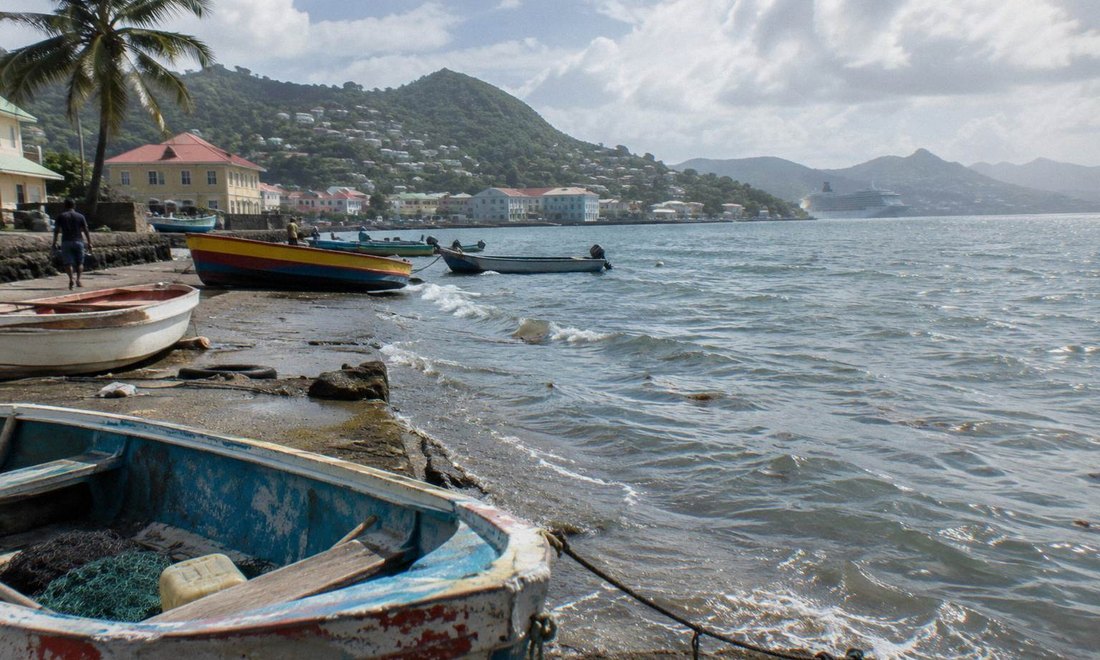
Cruise ships calling at Castries berth at two terminal areas: Pointe Seraphine and La Toc. Both sit inside Castries Harbour, and the whale watching boats leave from Vigie Marina, a short distance away on the same stretch of coast. The marina sits beside George F. L. Charles Airport, next to the runway, so the meeting point is compact and easy to describe to a taxi driver: Captain Mike's at Vigie Marina, just before the Coal Pot Restaurant.
Getting from ship to boat depends on which trip is booked. The Private Whale and Dolphin Safari listing includes cruise ship pier pick-up and drop-off, so the group is collected at the pier and returned there afterwards. The shared Whale and Dolphin Watching Cruise does not include pier collection, and neither trip includes hotel pick-up, so independent travellers make their own way to the marina.
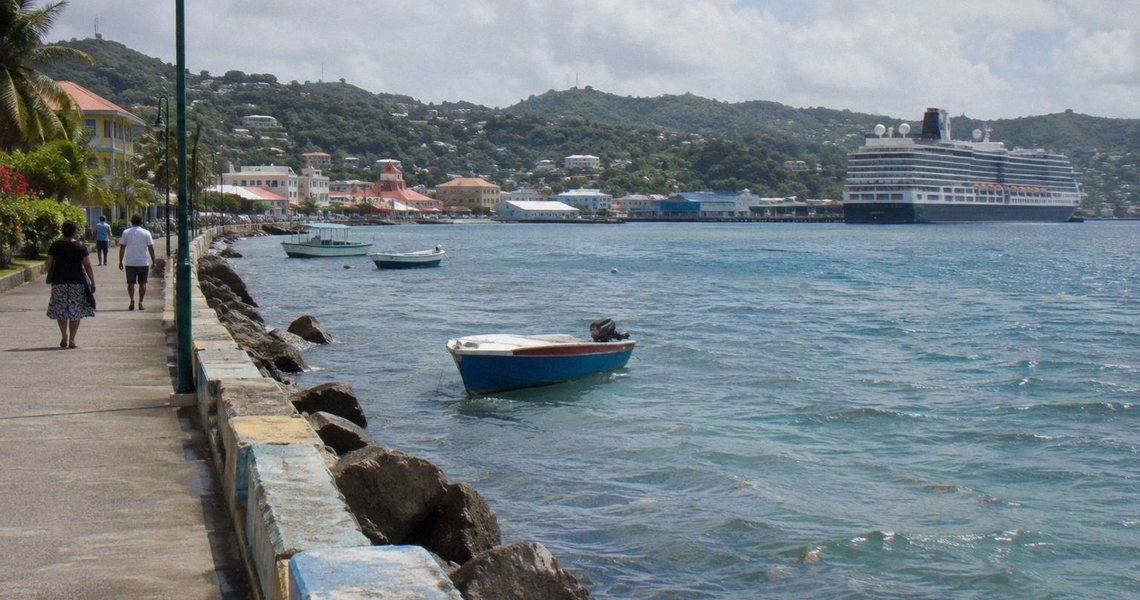
Timing is the other port-day question. The shared cruise is listed at about three and a half hours and the private charter at about four, and both leave in the morning. That has to be checked against the ship's all-aboard time before booking, because refunds will not be issued if the tour is missed due to a late or non-arriving cruise ship. Cruise passengers are asked to give the ship name, docking time, disembarkation time and re-boarding time when booking.
Both listings allow free cancellation up to 24 hours before departure, which matters if an itinerary shifts. Whose clock decides the day is ultimately the ship's, not the boat's, and the trip length is the number to measure against it.
A whale watching trip fits a Castries port day only if the numbers line up. The shared cruise runs about three and a half hours; the private charter about four. Add the time to get from pier to marina if no pick-up is included, plus whatever buffer a cautious traveller wants before all-aboard.
Start with the ship's schedule. Docking time, disembarkation time and re-boarding time are the three figures the booking asks for anyway. Subtract the trip length from the window between disembarkation and re-boarding, then subtract the transfer each way. What remains is the margin, and it either feels comfortable or it does not.
The private charter has one clear port-day advantage: pier pick-up and drop-off are included, which removes the transfer question entirely. The shared cruise costs less per person but leaves each guest to reach Vigie Marina on their own.
A tighter call favors the shorter trip. Half an hour is not much, but on a port day with a fixed re-boarding time it can be the difference between a relaxed return and a run along the waterfront. The 24-hour free cancellation on both listings is the safety net if the ship's itinerary changes after booking.
Saint Lucia's whale watching happens on the animals' terms. The boats work water where spinner, spotted and bottlenose dolphins, pilot whales in close-knit family groups, and sperm whales in the deeper offshore reaches live year-round, and how the boats behave around them shapes whether those populations stay tolerant of visitors.
The principles are simple. Boats approach slowly and never chase. Nobody touches or feeds a whale or dolphin, ever, however close an animal comes to the hull. The crew leaves the animals space to change direction or dive and move on, because a whale that feels crowded simply leaves, and a pod that is chased burns energy it needs elsewhere.
Guests play a part too. No sudden noise, no leaning out to reach an animal, no pressure on the crew to stay longer than the animals welcome. A good trip reports what the sea gives: sometimes a sperm whale logging at the surface, sometimes a bow-riding dolphin group, sometimes nothing but sea and coastline. Sightings always depend on weather, season and the animals' own movements.
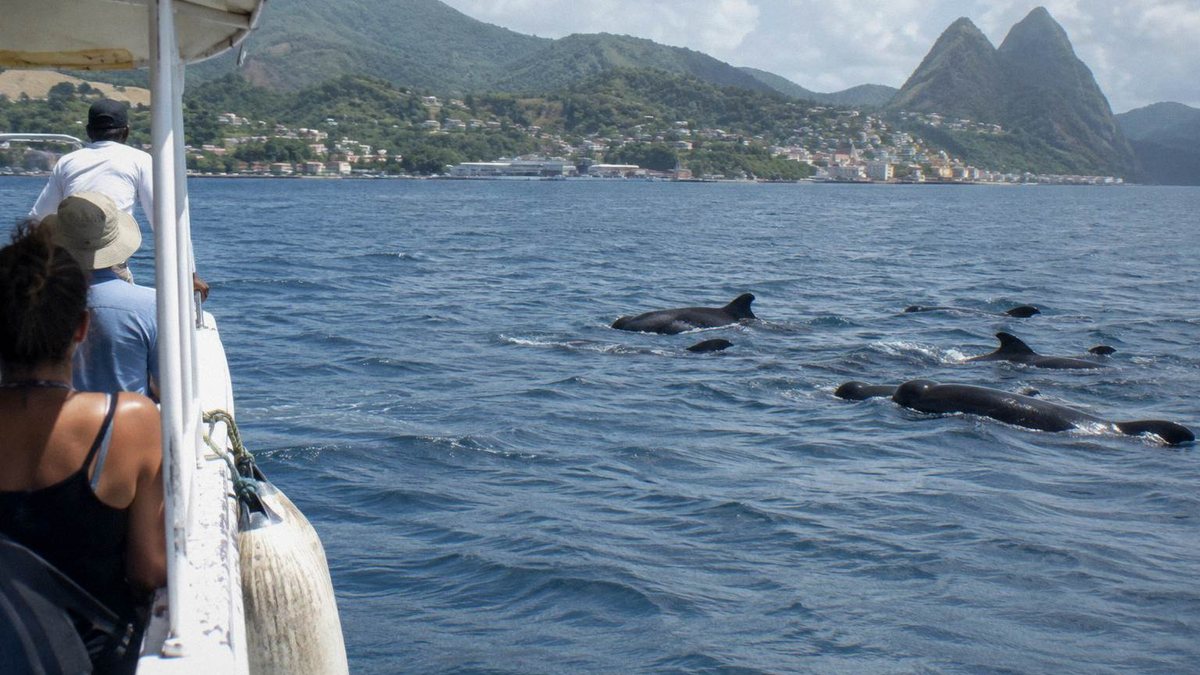
One boundary is fixed on both listings here: neither trip offers swimming with whales or dolphins. That is not a limitation the boats invented, it reflects how marine mammal watching in the region is meant to work, with observation from the deck rather than contact in the water. Anyone who wants more than a look should book a different kind of day.
The animals off Saint Lucia's west coast are not passing strangers, mostly. Dolphins and pilot whales are resident, seen all year in the same waters. Sperm whales off this coast belong to the wider Eastern Caribbean population, the one the Dominica Sperm Whale Project has studied for years, so the individuals a boat encounters may be ones researchers already know.
Resident animals meet boats repeatedly. A pod that is chased today may avoid boats next month, which hurts every operator and every visitor after it. That is the practical case for slow approaches, for giving animals room, and for accepting a sighting as a chance rather than an entitlement.
Operators can put this into formal practice.
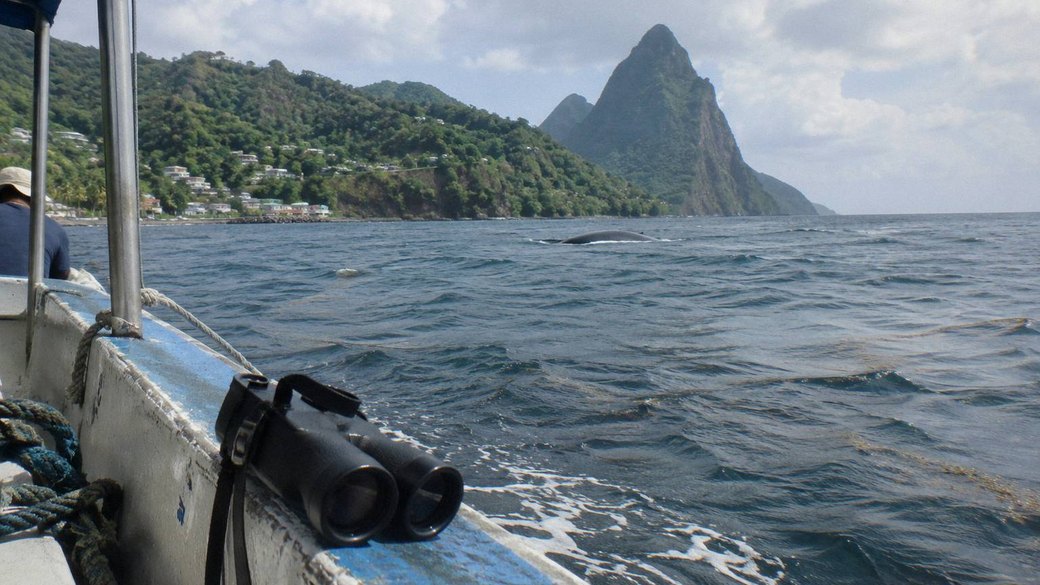
For the traveller, responsible watching mostly means choosing a trip that behaves well and behaving well on it. Keep noise down, keep hands in, let the crew manage distance. The reward is the real one: animals that stay willing to tolerate a quiet boat in their own home water.
The table below gathers the listing-level numbers from the booking pages as read in November 2026. Both trips carry a rating of 4.5, the shared cruise from 200 reviews and the private charter from 75.
The prices have different bases and the table labels them accordingly. The shared Whale and Dolphin Watching Cruise starts from US$65 per person. The Private Whale and Dolphin Safari is priced from US$2,550.65 per boat, not per head, because it is a charter for one group of up to 40 guests. Those two figures cannot be compared directly; one buys a seat, the other buys the boat.
Limits worth stating plainly: ratings and review counts come from the listings at the time of reading and can move as new reviews land. Prices are from-prices, the starting point rather than a ceiling. Lengths are the listed durations, about three and a half hours shared and about four private, and actual time on the water can vary with conditions.
| Trip | Listing Rating | From Price | Listed Length |
|---|---|---|---|
| Shared Boat, 3 Hours 30 Minutes | 4.5 from 200 reviews | US$65 per person | 3 hours 30 minutes |
| Private Charter, 4 Hours | 4.5 from 75 reviews | US$2,550.65 per boat | 4 hours |
Whale watching St Lucia trips both leave from Vigie Marina in Castries Harbour, so the lodging question comes down to how close to the boat you want to wake up.
Castries itself, around Vigie and the airport side of the harbour, puts travellers nearest the departure point. It is the working capital rather than a beach resort strip, but for a morning departure nothing is nearer.
Rodney Bay, north of Castries, is the island's densest hotel area, with the properties on file here clustered around the marina and beach. Guests reach Vigie by taxi for the morning trip; hotel pick-up is not included on either listing.
Marigot Bay, south along the west coast, is the quieter option, with two of the hotels on file sitting on its sheltered waterfront. It is the furthest of the three areas from Castries, though still near in island terms.
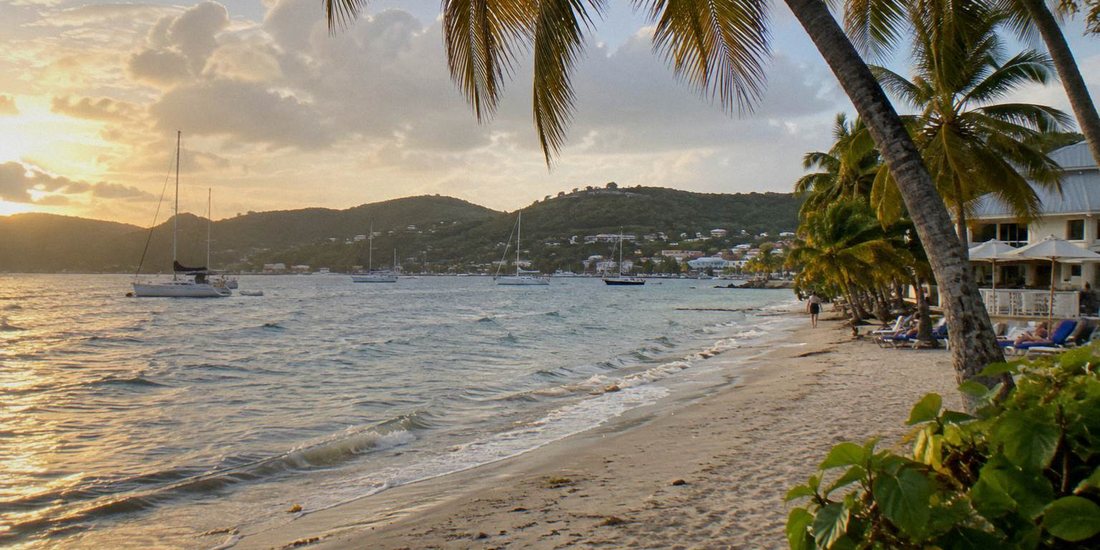
For St Lucia whale watching, any of these areas works, because the trip is a single morning commitment rather than a full day. The choice is really about what you want from the rest of the stay: capital-side convenience, Rodney Bay's restaurants and beach, or Marigot Bay's calm. Whichever you pick, budget for a taxi to Vigie Marina on the morning of the trip.
Rodney Bay
Check ratesRodney Bay
Check ratesRodney Bay
Check ratesBoth listed trips run about three and a half to four hours from Vigie Marina in Castries, and deep water lies close to the west coast, so the boats do not travel far offshore to reach whale habitat. Sightings always depend on season, weather and the animals' movements, so no trip can promise an encounter. The shared cruise carries a rating of 4.5 from 200 reviews on its listing, which suggests most guests rate the experience highly.
November sits outside the humpback window. Humpbacks pass through between about February and April, and they are unlikely from May to November. Dolphins such as spinner, spotted and bottlenose, plus pilot whales, can be seen all year, and sperm whales live in the deeper water offshore, so a November trip still has a chance of encounters. No source gives a guarantee, and no sighting percentage should be trusted.
The shared cruise uses a custom 60 ft boat and the private charter a 50 ft catamaran, both reasonably large platforms. Seas are typically calmer from December to May, which many guests prefer. If you are prone to motion sickness, ask the operator about the boat size and conditions before you go, take your usual remedies, and bring a light layer for spray. Neither listing promises calm water on any given day.
The listing for the shared cruise states that children must be accompanied by an adult and that infants and small children can ride in a pram or stroller. The private charter listing also notes infants can ride in a stroller. No minimum age is printed on either listing, so check the booking page for current terms before reserving, especially if you are travelling with very young children or a family group.
Both listed trips depart in the morning. The shared cruise is listed at about three and a half hours and the private charter at about four, and trips from this coast typically last three to four hours following the Caribbean coast. No clock time is printed here, so confirm the exact departure time on the booking page when you reserve, and plan to arrive at Vigie Marina with time to spare.
Both trips depart from Vigie Marina in Castries Harbour. The shared cruise meets at Captain Mike's, just before the Coal Pot Restaurant and beside the airport runway at George F. L. Charles Airport. The private charter includes cruise ship pier pick-up and drop-off in Castries. Neither trip includes hotel pick-up, so guests staying in Rodney Bay, Marigot Bay or Soufriere need to make their own way to the marina.
Ships berth at the Pointe Seraphine and La Toc terminal areas in Castries, a short distance from Vigie Marina. The private charter includes cruise ship pier pick-up and drop-off; the shared cruise does not. The shared cruise listing asks cruise passengers to provide ship name, docking time, disembarkation time and re-boarding time when booking. Check your ship's all-aboard time against the trip length before you book, because missed departures are not refunded.
The Private Whale and Dolphin Safari is priced per boat, from US$2,550.65, and takes up to 40 guests on a 50 ft catamaran. Split between 10 guests that is about US$255 each, arithmetic on the per-boat price, and between 40 guests about US$64 each on the same basis. For a large family or group it can work out near a per-head price, and the boat, guide and schedule are private to your group.
Sperm whales live in the deeper water offshore and are considered resident in the wider region, with occasional sightings. They belong to the Eastern Caribbean population studied by the Dominica Sperm Whale Project, although no Saint Lucia head count exists. Sightings depend on weather and the animals' movements, so the crew looks for them on every trip but no listing promises them on a given day.
The Atlantic hurricane season runs officially from June 1 to November 30. That is a calendar fact, not a comment on sightings or trip quality. If you prefer typically calmer seas, December to May is the period the tourism source highlights. Both listings offer free cancellation up to 24 hours before departure, and you should check the booking page terms if weather threatens your plans.
Dominica is known for a resident sperm whale population and a dedicated reserve. Saint Lucia is not known for a stable island-specific resident group, but its sperm whales belong to the same Eastern Caribbean population, and deep water lies close to the west coast, so animals can be seen not far from shore. St Lucia whale watching also adds year-round dolphins and pilot whales, plus humpbacks passing between February and April.
The shared cruise includes a local marine expert plus bottled water, soft drinks and rum punch; gratuities and hotel pick-ups are excluded. The private charter includes a professional guide, soft drinks, coffee, tea, mineral water, light snacks, rum punch, local fruit, and cruise ship pier pick-up and drop-off; gratuities and hotel transfers are excluded. Bring sun protection, a hat, a light layer for spray and a camera on either trip.
Both listings offer free cancellation up to 24 hours before departure. Cancel later than that, or miss the trip because a cruise ship arrives late or not at all, and the shared cruise listing states refunds will not be issued. Always read the exact terms on the booking page before you reserve, because the platform terms are what govern the booking you actually make.
This site is independent. When you book a trip through a link on these pages, the booking platform pays the site a small fee at no extra cost to you. The site runs no boats and sells nothing directly. All bookings, payments and confirmations happen on the third-party booking page, and prices, ratings and listing details there are the ones that apply to your purchase.
 Best Time By Month
 Castries Port Day Cruise
 Cruise Cost Guide
 Departure Points
 Dolphin Species Guide
 Family Cruise Guide
 Humpback Window
 Hurricane Season Cruises
 Marine Life West Coast
 Pilot Whales
 Responsible Watching
 Shared Or Private
 Sighting Odds
 Sperm Whales Saint Lucia
 West Coast Route
 Whale Cruise Vs Catamaran
 Whale Watching In The Caribbean: Saint Lucia Compared With Dominica
 What To Bring
 What To Expect